Why do small businesses need automation?
Automated Cybersecurity has become a must for safeguarding businesses, particularly Small to Medium Sized Businesses (SMBs). A recent NSCS survey found 59% reported a breach or attack in 2023 alone.
Addressing these concerns requires an approach that balances the need for effective security measures with the constraints of limited resources and expertise.
We’ll take a look at the main considerations for automated cybersecurity for SMBs: from managing the security of remote/hybrid workforces to staying informed about emerging threats.
We’ll also explore scalable options available for SMBs to upgrade their cybersecurity automation solutions, considering factors like risk assessment, adaptation to growth, and the strategic deployment of automation tools.
Why these topics? These are some of the biggest challenges SMBs face, and we want to help you overcome them!
Managing your remote workforce with automation
Since COVID-19, more people are working hybrid or remotely than every before. This has handed cybercriminals new ways of targeting organisations through their home workers. We are big advocates for remote working (we are a remote-first business after all), however it comes with its risk.
What are the security risks of remote working?
- Increased attack surface: More devices, network connections, and software to secure provide more entry points for threats.
- Unsecured and vulnerable networks: Home and public Wi-Fi networks are vulnerable to attacks such as man-in-the-middle attacks.
- Use of personal devices: Using personal devices for work complicates enforcing security policies.
- Lack of monitoring: Remote workers are not physically present in the office, which makes it difficult to monitor their cyber activities.
- Cybersecurity awareness: Employees may not recognise the cyber risks associated with working outside the office.
On top of this, the nature of SMBs means that individuals often operate with multifunctional roles, where they hold responsibilities in various areas such as finance and IT simultaneously. These diverse roles make employees potential targets from a variety of different angles, increasing their liability to cyber threats with high activity such as phishing and social engineering.
IT leaders report that finance is one of the most targeted teams for phishing attacks due to their access to critical information and sensitive data. The high-pressure environment of an SMB only heightens the likelihood of falling victim to such attacks.
Automation is important for managing security effectively. By automating the identification and response to security threats, you can better protect your remote or hybrid workforce. Automation allows for quick threat detection and timely responses, no matter the user’s role or industry.
Also, automation speeds up the implementation of proactive measures, such as automating change management processes. It defines expected and normal changes within the business, which means you can quickly detect and verify deviations, to ensure that only authorised modifications proceed.
With this in mind, automated security tools need to be user-friendly to support small teams with limited expertise. You can’t expect your employees to be experts in AI and large language models (LLMs) whilst also juggling their busy roles.
Simplifying these technologies and minimising training requirements is essential to enable your business to efficiently identify and address security risks without significant delays or disruptions to their operations.
Aligning security measures with your organisation’s evolving needs and facilitating ease of use, allows automation to become a vital partner in managing remote workforce security.
Staying informed about emerging cybersecurity threats
This is a challenging aspect of cybersecurity, as threats are always evolving. Organisations have enough to stay up to date within their day to day and keeping up with the marketplace adds another layer.
The speed, complexity, and growth of cyber threats to SMBs are simply too much for one business to handle, let alone manage effectively (which is why they make excellent targets for cyber criminals).
Let’s go back to our employee who is already wearing multiple hats – finance and IT. When analysing the marketplace, they would have to manually identify and understand threat intelligence from multiple sources, and then figure out how this applies to the security of the business.
This person is already overworked in their role may not action a defence strategy in a timely fashion – leaving the business at risk of an attack.
Automation can be used to streamline monitoring efforts, focusing on areas where you are most vulnerable. Establishing clear policies and processes will allow you to quickly evaluate changes within the supply chain and determine their impact.
This way, you can differentiate between acceptable changes and suspicious activities, taking quick action when needed to protect your organisation.
By pinpointing these high-risk areas, you can proactively reduce your exposure to potential threats and utilise the resource in your business wisely.
Ensuring automated processes align with risk management strategy
To ensure that automated processes align with your risk management strategy, you need to focus on several key aspects.
Firstly, automated processes encompass various tasks, including vulnerability scanning and continuous monitoring to detect emerging issues with speed. By implementing automated detection and response mechanisms, you can mitigate risks efficiently without relying on manual triage.
Secondly, response strategies must be tailored to address different types of risks across technology, data, user behaviour, cloud services, and third-party technologies. This requires the ability to identify various entities and attributes associated with potential risks.
Also, risk management strategies should prioritise higher-risk areas within your organisation, such as specific user groups or technologies prone to targeted attacks. By categorising users and technologies based on risk levels, you can allocate resources effectively to minimise potential threats.
Scaling your cybersecurity automation solutions
When it comes to upgrading cybersecurity automation solutions, you have a range of options to consider.
Assess where your business stands currently, where it’s headed, and how its threat landscape is evolving. It’s important to understand how changes in your business might impact your current security posture. This involves both horizontal and vertical considerations, such as looking at how similar organisations have adapted their security measures.
But, the goal isn’t to keep adding more solutions, which could lead to complexity and increased costs.
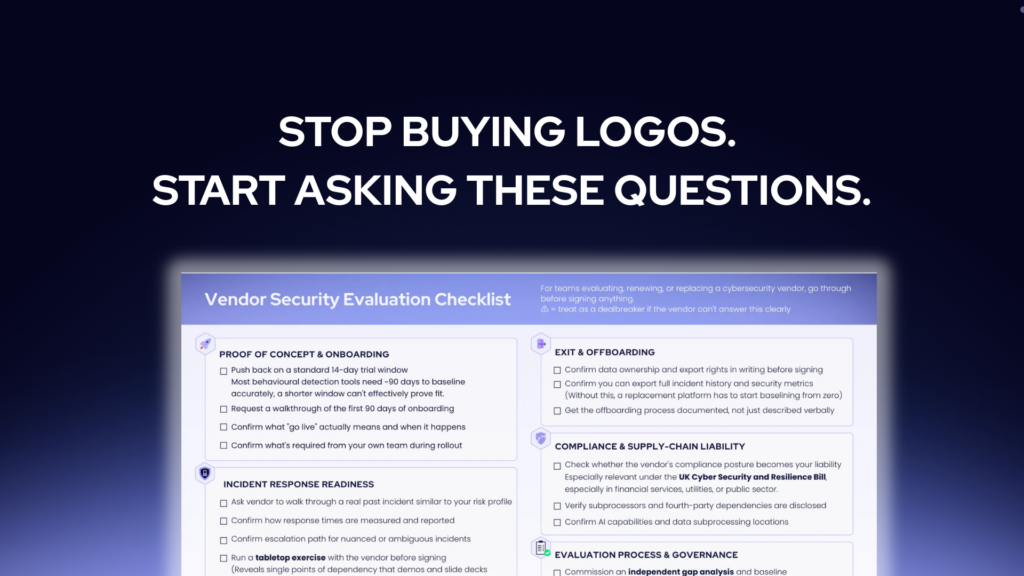
Instead, it’s about conducting regular gap assessments and evaluating the effectiveness of existing cybersecurity solutions. You must understand where risks are emerging and prepare for them accordingly. This includes looking at potential interface issues and ensuring that automation aligns with your organisation’s growth.
Scaling cybersecurity automation solutions is not an afterthought. It requires a strategic approach.
You need to consider the volume of threats you may face and scale your solutions accordingly, avoiding overinvestment in unnecessary features. The beauty of automation lies in its adaptability. Unlike rigid security frameworks, automation allows businesses to evolve gradually, ensuring that their security strategies remain reliable and effective as they grow.
Final thoughts: automated cybersecurity for SMBs
Automating cybersecurity for your SMB offers a powerful solution to tackle your distinct security challenges head-on.
Effectively managing your resources and navigating the continuous development of cyber threats will always remain a challenge. However, taking a strategic approach to automation and adopting scalable cybersecurity solutions can help your business improve its security posture while optimising resource allocation.
If you’re looking to protect and scale your business without the worry of overinvesting in unnecessary solutions, CloudGuard offers a Security Gap Assessment. This assessment provides a comprehensive view of your organisation’s risk exposure, along with actionable insights to effectively address these risks.