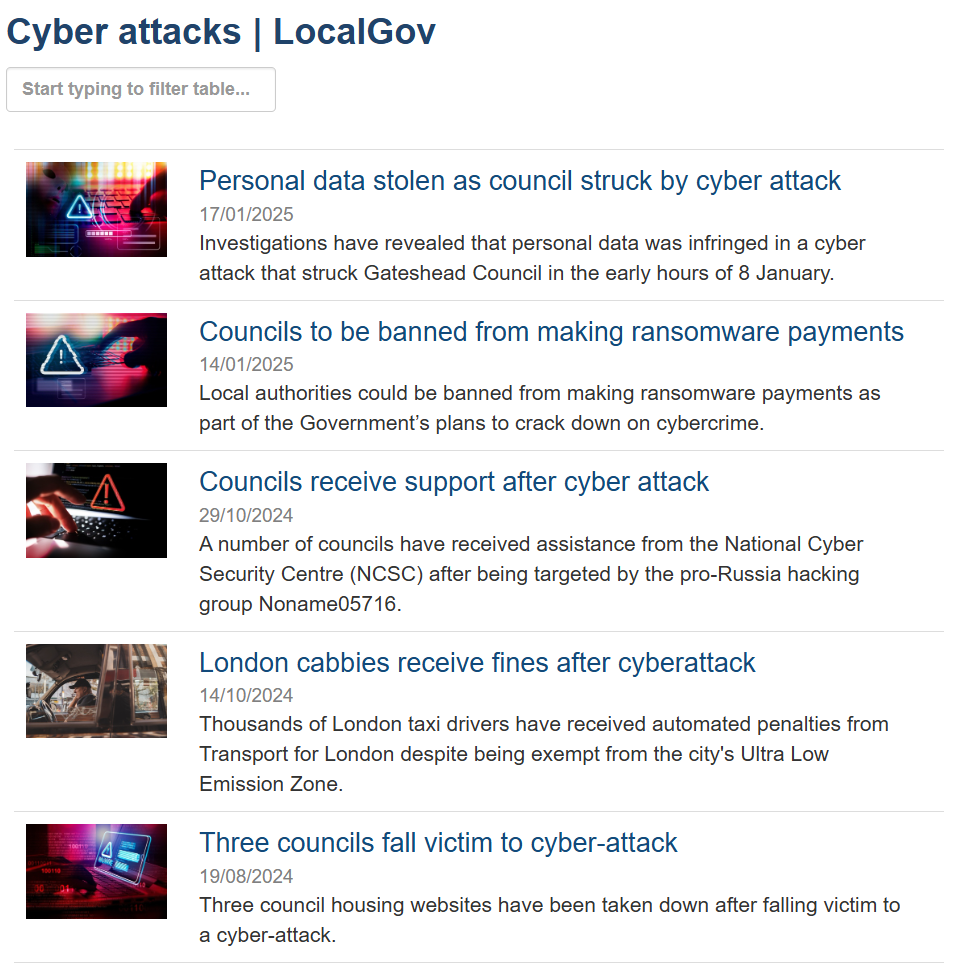
Cybersecurity threats are a growing concern for every local council, including yours. You only have to look at the news to see how often they’re happening. Just look at this news feed.
On the increasing risks facing UK governments, Gareth Davies, Head of the National Audit Office says:
The government will continue to find it difficult to catch up until it successfully addresses the longstanding shortage of cyber skills; strengthens accountability for cyber risk; and better manages the risks posed by legacy IT.
As you continue to embrace digital transformation, your reliance on online services, cloud platforms and digital workflows increases. While these advancements make service delivery more efficient, they also expand your exposure to cyber threats.
That’s why the Cyber Assessment Framework (CAF) for Local Government is such an important tool. It helps you assess, understand and strengthen your council’s cyber resilience.
At CloudGuard, we work closely with councils like yours. We help them build stronger defences against cyber threats. We know that keeping your services secure while juggling budget constraints and compliance demands is no easy task.
That’s why we believe the CAF for local government is a game-changer. It’s a practical, structured and effective way for you to manage cyber risk. Here’s why it matters to your council.
What is the local government CAF, and why does it matter to you?
The original CAF was originally developed by the National Cyber Security Centre (NCSC). You can read our full guide on that here.
The CAF’s goal is to provide a systematic, comprehensive approach to assessing cyber risks. While the NHS and Department for Work and Pensions (DWP) are adopting their own versions, local councils face unique challenges that demand an adapted version tailored to your needs.
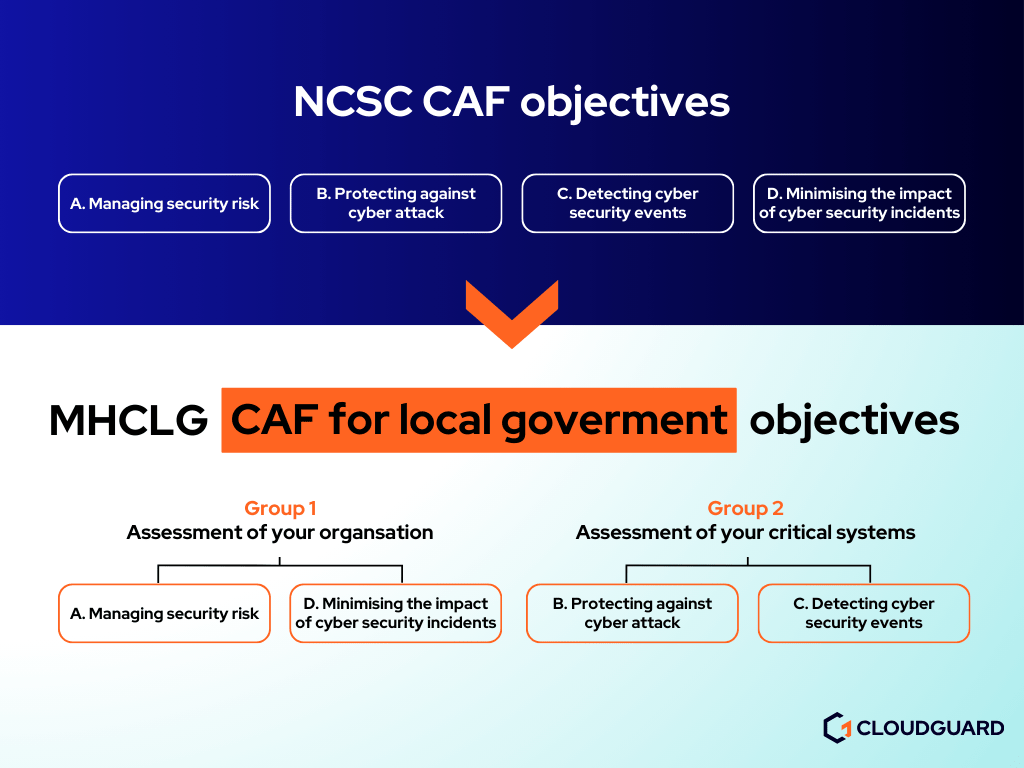
Unlike traditional cybersecurity compliance measures, the CAF for local government is not just a tick-box exercise. It’s a practical tool designed to help you:
- Identify vulnerabilities in your critical systems
- Strengthen resilience against cyber attacks
- Prioritise resources effectively
- Benchmark against national cybersecurity standards
It also gives you a clear action plan to improve your cyber readiness, making it easier to justify security investments to leadership and stakeholders.
Cybersecurity isn’t just IT’s problem. It’s your whole council’s responsibility
One of the biggest challenges councils face is the belief that cybersecurity is solely an IT issue. But that’s a misconception, and the CAF for local government is designed to challenge that mindset.
Cybersecurity should be everyone’s responsibility. From leadership to frontline staff. The CAF for local government encourages collaboration across your departments, making sure that security is embedded into your council’s daily operations, policies and decision-making processes.
By adopting the CAF, you’re not just protecting your IT infrastructure. You’re also protecting critical services, sensitive data and the citizens who rely on you.
Designed with councils like yours in mind
The CAF isn’t just another government directive. It has been co-developed with local councils through pilot programmes. Over 20 councils took part in testing, providing feedback that directly shaped how the framework works in practice.
Because of this, the CAF for local government takes into account the unique challenges you face and is split into two key assessments:
- Your council’s organisational approach to cybersecurity. This assesses how cybersecurity is managed at a leadership and policy level.
- Your critical systems’ ability to withstand cyber threats. This looks at how well your essential services are protected against attacks and how prepared you are to detect and respond to incidents.
By applying both of these assessments, you get a full picture of your council’s cybersecurity landscape. This in turn will help you build a more resilient, security-first culture.
The CAF isn’t mandatory. So why should your council do it?
Right now, the CAF is a voluntary tool. BUT that doesn’t mean you should ignore it. The councils that have already used it are seeing huge benefits, including:
- Identifying cyber risks before they become crises
- Strengthening resilience against cyber attacks
- Focusing resources on the most urgent security gaps
- Receiving clear, actionable recommendations
- Benchmarking against a national cybersecurity standard
If you wait until a major cyber incident happens, it could cost your council millions.
That’s not just in recovery expenses but in lost public trust and service disruptions. Taking action now is far more effective (and cost-efficient) than reacting to a crisis later.
Could a single cybersecurity framework reduce your council’s compliance burden?
If your council works with the NHS, DWP or other government departments, you’re likely dealing with multiple overlapping cybersecurity standards like PSN, NHS IG, DWP security frameworks and more.
Each of these demands time, resources, and compliance efforts, creating a huge administrative burden for your team.
But things might be changing. With the DWP and NHS England moving towards CAF-based assessments, there’s a real opportunity for your council to benefit from a single, standardised approach to cybersecurity compliance.
The UK Government is already exploring how to streamline these requirements. Your council could be at the forefront of shaping this shift.
By adopting the CAF for local government now, you position yourself ahead of the curve. Potentially reducing future compliance workloads while strengthening your security.
How we can help your council implement the CAF
At CloudGuard, we specialise in helping councils like yours navigate cybersecurity challenges.
We understand the pressure you’re under to protect public services while managing tight budgets and complex regulations. That’s why we offer tailored support to help you make the most of the CAF for local government.
Here’s how we can help:
- CAF readiness assessments – We’ll evaluate your council’s cybersecurity posture, identifying areas where you’re already strong and where you need improvement.
- Gap analysis & remediation – We’ll help you identify vulnerabilities and develop a plan to address them.
- Training & awareness programmes – We’ll ensure your leadership and staff understand their role in maintaining cybersecurity.
- Incident response planning – We’ll help you prepare for and respond to cyber incidents quickly and effectively.
The bottom line? Take action now to protect your council’s future
The CAF for local government is a transformative tool that can help you strengthen your council’s cybersecurity, improve resilience and protect public services.
You have the opportunity to take proactive steps today, rather than waiting for a disruptive cyber incident to force your hand.
The CAF for local government provides a clear roadmap for strengthening security. We’re here to help you every step of the way.
If your council is ready to implement the CAF for local government and take control of your cybersecurity future, get in touch with us today. We’ll help you turn the framework into an actionable, effective strategy that works for you. Check out cybersecurity for government.