It’s a sad truth that today’s Security Operations Centres often face uphill battles. Threat volumes continue to rise with teams now handling an average of 4,484 alerts each day.
This level of noise fuels alert fatigue and undermines even the most capable analysts’ effectiveness. Traditional SIEM cybersecurity tools promised greater visibility and faster threat detection. But what they delivered was mind-boggling complexity and costly overruns.
The real challenge comes when security systems start creating more problems than they solve. Many businesses we talk to find it difficult to maintain strong cyber posture. Their IT teams are spending more time managing tools than handling threats.
Breaking this cycle requires a major shift in how modern SIEM solutions are designed and implemented.
Why legacy SIEM hurts more than it helps
Legacy SIEM cybersecurity tools were built for a different threat landscape. Success requires on-premise infrastructure, expensive licensing and constant maintenance that swallows up valuable time and resources. For example, the ongoing effort required to update correlation rules and manage data pipelines in platforms like Splunk or QRadar.
Security analysts are unable to deal with 67% of the daily alerts received, with 83% of those alerts found to be false positives.
The high false positive rate creates more problems than it solves as every alert demands investigation time. This causes security analysts to chase low-value signals whilst critical threats progress undetected.
This perfect storm makes alert fatigue inevitable, leading to declining team morale and eventual burnout that affects the entire security operation.

Manual log analysis consumes valuable hours as teams drown in data but lack actionable intelligence. This causes detection times to dangerously expand with response capabilities lagging and security gaps widening
The human side makes things even harder. Talented security professionals feel worn out and leave, taking vital knowledge with them and forcing businesses into costly hiring and retraining loops.
The operational cost of this chaos reaches far beyond licensing fees, affecting everything from incident response effectiveness to long-term security posture resilience.
What good SIEM cybersecurity looks like today
Thankfully, modern SIEM cybersecurity is different. It uses cloud-native architecture that eliminates infrastructure management overhead and enables automatic scalability.
This allows security teams to focus on what they’re good at rather than platform admin.
Built-in correlation and advanced analytics reduce noise through machine learning. This helps to identify patterns that traditional rule-based systems miss, accelerating threat detection whilst also slashing investigation time. This shift from reactive to proactive security operations is what helps teams use tools rather than manage them.
Automation changes response capabilities through Security Orchestration, Automation and Response (SOAR) functionality. This turns repetitive tasks into automated workflows, freeing analysts to focus on the complex investigations and novel threats that require human expertise and judgement.
Integration happens seamlessly across security ecosystems because some modern SIEM platforms have the potential to connect with existing security tools, allowing data to flow freely across on-premise, cloud and hybrid infrastructure whilst threat intelligence feeds can enrich alerts with the latest intel.
Security teams can now see the bigger picture. Their workload becomes manageable and security posture strengthens measurably through this coordinated approach.
Microsoft Sentinel: the modern SIEM example
Microsoft Sentinel perfectly captures what modern SIEM cybersecurity should deliver by combining SIEM and SOAR functionality in a unified, cloud-native platform.
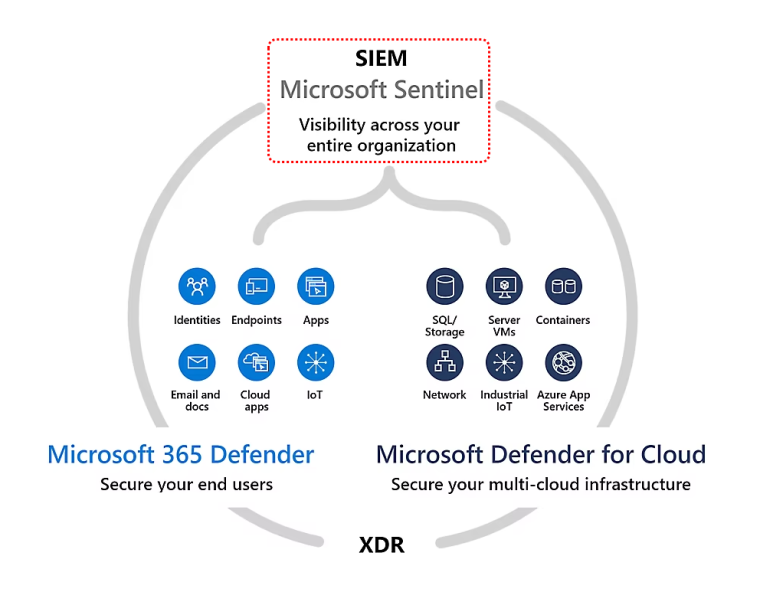
Connectors integrate data from Microsoft 365, Azure Active Directory, Amazon Web Services and third-party security tools to centralise security data in one platform, improving visibility across entire technology estates.
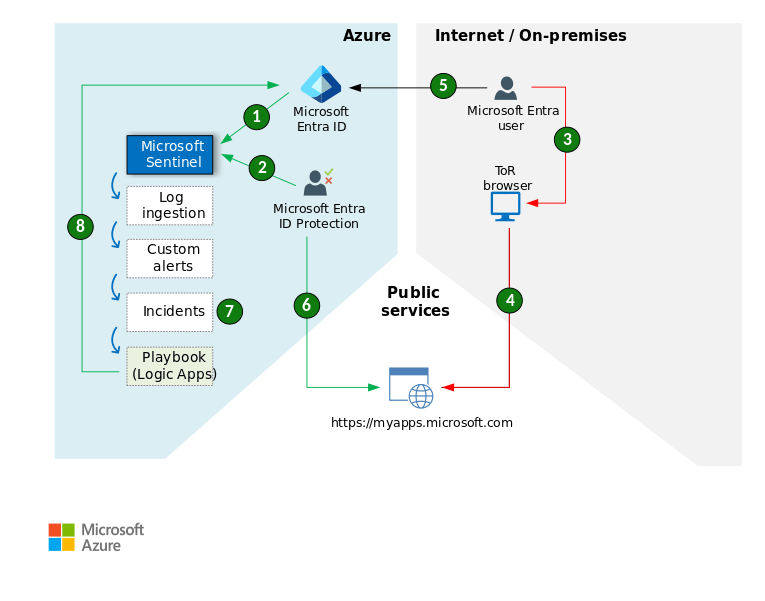
AI-powered detection identifies threats with greater speed and accuracy through User and Entity Behaviour Analytics (UEBA). This detects anomalies that old school, signature-based approaches miss, whilst playbooks automate response actions based on security policies. Now teams can respond to confirmed incidents in minutes rather than hours.
On the cost front, the consumption-based pricing model removes upfront infrastructure investment because organisations pay for data ingestion rather than fixed licensing. This makes scaling up or down much easier without the dreaded contract renegotiations.
However, these productivity and budget wins mean nothing without proper implementation and ongoing optimisation. This is what usually separates successful Sentinel deployments from expensive failures in our experience.
The catch: SIEM success depends on setup and optimisation
Sentinel alone does not guarantee success. We see many organisations rush deployment and create new operational challenges that undo the platform’s potential benefits.
Data ingestion costs can spiral out of control when teams connect every available data source without considering whether the sources deliver actual security value. This can lead to surprise billing, and no one wants to have that conversation with the board or finance team.
Poorly configured correlation rules generate excessive false positives that swap one alert problem for another. Successful deployment requires a deep understanding of specific environments and threat profiles to tune effectively.
Automation capabilities are wasted without proper configuration. Why? Because playbooks require initial setup and ongoing refinement. Teams continue handling everything manually whilst SOAR functionality sits there doing nothing despite being technically available.
Threat hunting requires strategic frameworks. Setting off on random searches wastes an analyst’s time with little to show for it. For the hunt to be effective, they need to know what they’re looking for and how they will find it.
We often see that regular health checks become victims of other business priorities, allowing SIEM platforms to drift out of optimal configuration. The result? Performance gets worse, costs increase and detection quality slips over time.
Modern SIEM done right
SIEM cybersecurity and effective security operations go hand-in-hand.
It provides the capabilities security teams need to detect and respond to threats through cloud-native architecture, advanced analytics and intelligent automation. Cybersecurity goes from being reactive to proactive.
Technology alone does not mean the job is done. Implementation quality and ongoing optimisation separate effective SIEM deployments from expensive failures, requiring strategic data ingestion planning, careful rule configuration and continuous health monitoring.
We believe security teams deserve tools that don’t get in their way whilst also improving security outcomes. This means visibility without complexity, as well as automation that genuinely assists their work rather than creating new admin headaches.

We get how stressful managing complex security infrastructure can be, which is why we help IT teams improve their security posture through expert Microsoft Sentinel implementation and optimisation that reduces alert fatigue, improves threat detection and controls costs.
Want a SIEM that actually reduces workload and improves security outcomes? Get a Microsoft Sentinel Health Check and discover how to tune and optimise your SIEM for clarity, cost efficiency and faster response.
Learn more about Microsoft Sentinel optimisation
Frequently asked questions about cybersecurity incident response
How does modern SIEM security differ from traditional log management? Traditional SIEM collects logs passively whilst modern platforms actively hunt threats using AI-powered analytics, behavioural analysis and automated response. The shift moves from reactive investigation to proactive detection and containment.
What’s the biggest mistake organisations make with SIEM implementations? Treating SIEM as set-and-forget technology. Effective SIEM security requires continuous tuning, regular health checks and ongoing optimisation to maintain detection accuracy whilst controlling costs and reducing false positives.
Can smaller IT teams realistically manage modern SIEM platforms? Yes, but often with expert support. Cloud-native platforms reduce infrastructure complexity, but configuration, threat hunting and optimisation still demand specialist expertise that many teams access through managed services or consulting partnerships.
Sentinel Health Check – https://cloudguard.ai/services/cybersecurity-consulting/microsoft-sentinel-health-check/
Security Posture Assessment – https://cloudguard.ai/services/cybersecurity-consulting/security-posture-assessment/