The human cost of manual security
Picture a security operations centre (SOC) at 9am. Overnight, thousands of alerts have piled up. Analysts open their dashboards to a wall of red notifications. Every ping might be a false alarm, or it might be the start of a real breach. The team must sift through them all, manually triaging each one, hoping not to miss the signal in the noise.

This is where alert fatigue sets in. Hours of repetitive, low-value work leave analysts drained. Burnout rises, threats slip through the cracks and response times slow down. In cybersecurity, minutes matter, yet humans alone cannot keep pace with the scale and speed of modern attacks.
Behind the scenes, the problem is not just operational. It’s personal. Talented analysts enter the industry to solve complex security problems, yet many find themselves buried in false positives instead. The constant noise makes it harder to stay motivated.Managers then struggle to balance the pressure of daily firefighting with the need to keep staff engaged.
This erosion of focus and confidence is one of the biggest hidden costs of manual security.
Why manual effort doesn’t work
Relying on manual processes to manage alerts is no longer realistic.
- False positives overwhelm teams: Most alerts turn out to be harmless but analysts must investigate them all before ruling them out.
- Human errors are inevitable: Under pressure, fatigue leads to mistakes, missed alerts and delayed responses.
- Morale takes a hit: Skilled professionals spend their time firefighting instead of applying their expertise where it counts.
The result is not just weaker security but higher staff turnover and escalating costs. It’s a cycle that drains both people and organisations.
Automation security: the fix
Automation security changes the game by allowing technology to handle repetitive, time-sensitive tasks. At CloudGuard, we define automation security as the use of AI and orchestration to manage detection, triage, prioritisation and even certain response actions without human intervention.
The video below shows how automated triage filters, enriches and escalates only the threats that matter, compared with the slow, error-prone process of manual triage.
The benefits are immediate and tangible:
- Filters out false positives so analysts only see verified threats.
- Automates routine playbooks such as blocking IP addresses or isolating endpoints.
Accelerates decision-making with enriched alerts and context. - Frees humans for strategy rather than constant firefighting.
For teams, this means reduced stress, sharper focus and greater impact. For organisations, it means stronger protection and faster response times. Automation is not about replacing people. It’s about supporting them so they can work smarter, not harder.
Proof in practice
A recent project with Amazon Filters shows how automation security delivers measurable results. As a UK manufacturer facing rising cyber threats, their small IT team struggled to keep pace with alert volumes. Within just 90 days of deploying CloudGuard’s PROTECT+ MXDR service, automation was handling 98% of alerts, saving the equivalent of 52 days of manual effort.
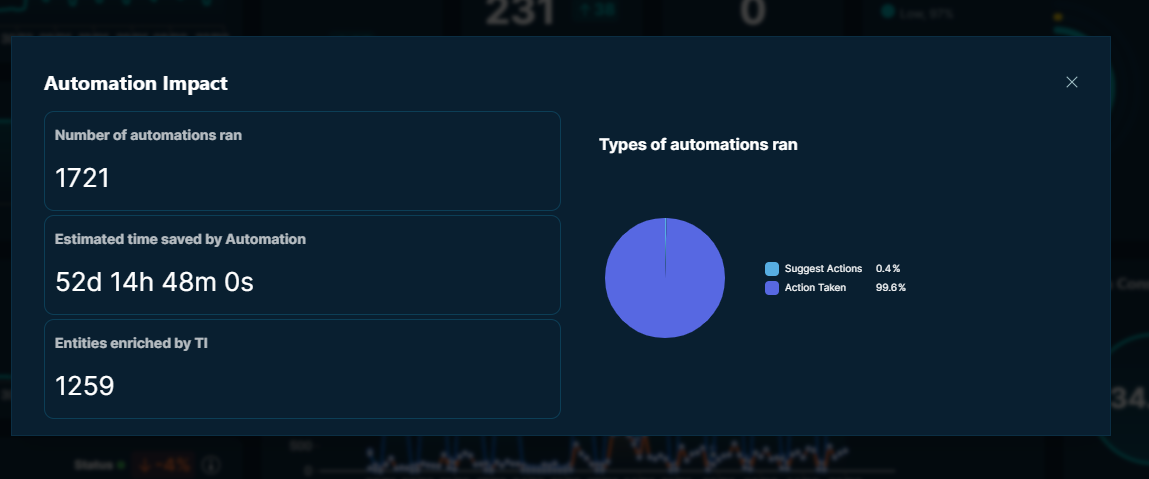
By integrating directly with Microsoft Sentinel, CloudGuard streamlined detection, triage and response. Our AI analyst Ansel played a central role, automatically validating alerts and escalating only the incidents that mattered. That meant fewer false positives, faster containment and more time for their analysts to focus on higher-value work.
The outcome was clear: a happier SOC team, a significant cut in mean time to resolution, and a stronger security posture across the organisation. Or, as Amazon Filters’ IT Manager put it:
“CloudGuard’s MXDR service has been a game-changer for Amazon Filters. The automation and proactive threat detection have not only strengthened our security posture but also saved us time and resources.”
For Amazon Filters, automation security was not just about efficiency, but about building confidence that threats were being dealt with quickly and consistently.
Listen to our podcast on automation in security: The good, the bad and the inevitable
Make automation a people-first investment
Automation security is often framed as a technical upgrade, but it should also be seen as a people investment. Reducing alert fatigue helps retain skilled staff, makes the SOC a more sustainable workplace and increases confidence across the organisation.
If your team is drowning in alerts, the first step is simple: audit your current triage process. Identify bottlenecks, track the time spent on false positives and ask where automation could cut the drag.
We can help you map those opportunities and guide your automation journey. From piloting automated playbooks to fully integrated SOC operations, we support you every step of the way.
Contact our team today for more information and advice.
Meet Ansel, our AI security analyst